miércoles, 31 de julio de 2013

No technology? No way!!


Technology is to become part of our everyday life in this age of human history. We have become dependent on technology without realizing it. We cannot do without our cell phones and computers. But there comes a time when it begins to affect our daily activities. Because in some cases without the technology we can’t do anything.


Some advantages of technology by (YIGA., 2012) are:
·   Easy Access to information: It has become very easy to get access to relevant information at any time anywhere. 
·     Encourages innovation and creativity: Since technology is challenging, it sparks the brain to work to its full potential. 
·  Improved communication: Modern technology has blessed us with advanced communication technology tools. These can include e-fax machines, electronic mail, mobile phones, videoconferencing, instant text messaging applications, social networking applications. All these modern communication technology tools have simplified the way humans and businesses communicate. 
·   Improved Entertainment: Modern technology has played a big role in changing the entertainment industry.  

Some disadvantages of technology by (YIGA., 2012) are:
·    Increased loneliness: Social Isolation is on the increase, people are spending more time playing video games, learning how to use new modern technologies, using social networks and they neglect their real life.
·  Job Loss: Modern technology has replaced many humans; robots are doing of the jobs which used to be done by humans.
·    Competency: Increased dependency on modern tools like calculators has reduced on our creativity.

·    World destruction weapons:  Modern technology has been the main aid in the increasing and endless wars. 

Glossary

ü  Banned:  prohibited.
ü  Defective: Having a defect
ü  Drive you crazy:  somebody is very annoying or irritating and they make you nervous you can say that they are driving you crazy.
ü  Frustrated: disappointed
ü  Getting under my skin: to bother or irritate someone.
ü  Irritated: To rouse to impatience or anger; annoy
ü  Jolted: startled, surprised.
ü  Offense: The act of causing anger, resentment, displeasure, or affront.
ü  Pay a fine: When you pay something such as a bill or a debt, you pay the amount that you owe.  
ü  Prompted: allowed.
ü  Retaliatory: involving revenge.
ü  Screech: A high-pitched, strident cry.
ü  Sending me over the edge: frustrating me greatly.
ü  Shattered: destroyed.
ü  Siren:  warning signal.
ü  Sonic: noise.
ü  Towed: removed.
ü  Vibrations: movements.
ü  Vigilante: a person who punishes others.
ü  Wail: long loud cry. 

Grammar

Future perfect and future progressive

Future perfect is used to talk about a future action that will already have been completed by a certain time in the future.

To form the future perfect, active voice:
Use will + have + past participle


To form the future perfect, passive voice:
Use will + have been + past participle


Future progressive is used to describe actions that will be in progress at a specific time in the future.

To form the future progressive:
Use will + be + present participle


Bibliography

Dictionary, C. C. (2013). reverso. Retrieved from http://dictionary.reverso.net/english-cobuild/to%20pay%20a%20fine
Marató, Z. ( 2012, March 26). Escuela de Idiomas Barcelona. Wellington House Idiomas – Cursos de Ingles Barcelona. Retrieved from Meaning of English Expression “Drive Me Crazy”: http://wellingtonhousebcn.com
Farlex. (2013). the free dictionery . Retrieved from http://www.thefreedictionary.com/
YIGA., P. ( 2012, november 6). Use of Technology. Retrieved from MODERN TECHNOLOGY ADVANTAGES AND DISADVANTAGES: http://www.useoftechnology.com/modern-technology-advantages-disadvantages/


Finding a niche: The Challenge for Young Immigrants


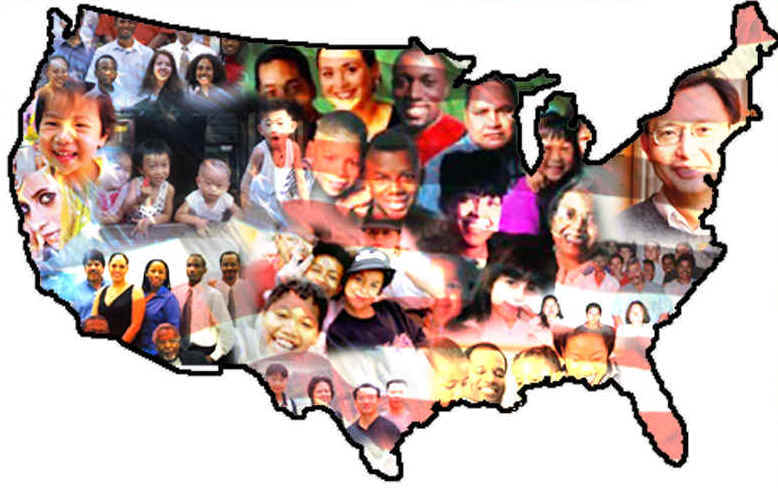
Immigration is (Farlex, 2013) when someone enter and settle in a country or region to which one is not native. Immigration can occur for various reasons. For example:
  •        By wars.
  •        By political and economic problems.
  •        By lack of jobs.
  •        By marriage.
  •        Insecurity.
  •        For work.


But regardless of the reason, if the change is unexpectedly is more difficult to adapt to the new place. Because they need to understand the culture and context in which they are to know how to behave.


Some challenges they face can be:

§      The mockery of others.
§       The language change, if necessary.
§      Culture change.
§       Discrimination.
§      The idea that everything is new and you have to start again and lack of family and friends.
§      Job search.
§      They will need to do the paperwork for the nationalization.


At the beginning the change will be difficult. Bad moments passed but when they adapt and understand the context and culture everything changes. To fit you need to have courage and not be intimidated by what others say. Also must being open minded to change and different ideas.

One of my best friends of school was an immigrant from Colombia she has to come to Costa Rica because their parents need it. In this case the change was not to strong. But she told me that she has to be careful with her vocabulary because some words has a different meaning here than in Colombia. After finishing school her family moved to Texas and there she has to work hard to be accepted. She told me that at the beginning it was difficult but she get it.


Glossary

  • Unique: special.
  • Native tongue: first language.
  • Flourishing: developing well
  •  Mainstream: the common way of thinking or acting.
  • Tight-knit: close, connected.
  •  Assimilate: adapt.
  •  Suppressed: removed from.
  •   Relieved: happy that you don’t have to worry about something.
  •   Bone up on: review.
  •   Intimidating: frightening.
  •   Uprooted: not allowed to express.
  •  Set apart: make someone or something different.
  • Interpret: To offer an explanation, To serve as an interpreter for speakers of different languages.
  • Niche:  A place hat you fit in.
  •  Support: To bear the weight of, especially from below.
  •  Blend in: act in similar way
  • Deal with: do what is necessary to solve a problem.
  •  Encouragement: praise, support.
  • Dialect: a distinct variety of language.
  •  Punishment: something that is done to make someone suffer. 

Grammar

Present Progressive and Simple Present

Present progressive is used to describe something that is happening right now.


Simple present is used to describe a general fact or habit.


The Present progressive can be used with the simple present to describe a present action that is continuing while another present action takes places.


The simple present is also used with non-action verbs to refer to states that are true at the moment of speaking.


Past Progressive and Simple Past

The past progressive is used to describe an action that was in progress at a specific time in the past.


The simple past is used to describe an action that was completed in the past.


The past progressive is used with the simple past to describe one action that was interrupted by another action.


The simple past is used to describe two actions that happened in a sequence, one after another.


Present Perfect and Present Perfect Progressive

The present perfect and present perfect progressive are used to talk about things that started in the past, continue to the present, and may continue in the future.


The present perfect is used to talk about things that happened:

ü  At an unspecified time in the past.
ü  More than one time in the past.


Bibliography

Farlex. (2013). the free dictionery . Retrieved from http://www.thefreedictionary.com/
 Ferre, T., & Sanabria, K. (2009). overload informtion. In T. Ferre, & K. Sanabria, north star 4 (pp. 169-192). USA: Pearson Longman.


jueves, 25 de julio de 2013

Goodbye to the sit-down meal


During the day the whole family is out  with all kinds of people.  The only time that the family gets together is at the dinner. Some times when everyone is at home some distractions even affect the sit-down meal, for example the technology or the task that we have to finish. This time is important for the family, because it promotes the union and communication among its members. In the past the sit-down meals were very important but now they have diminished.


The reason for this is:

  • We are so busy that we don’t have time to cook.
  • The fast food is cheaper in some cases.
  • Everyone arrived to the house late or at different hours.
  • Some of the members don’t eat because they have to finish their homework.
  • Someone is out in another activity or party with their friends.

Eating meals together as a family has some benefits like (SEAMAN, 2011): 

  • Eating together is more efficient, less expensive and healthier.
  • Eating together teaches children food sustainability.
  • Eating together builds closer relationships within the family.

To make this time good and efficient is better if they try (SEAMAN, 2011):

  • Try setting a modest goal of two times a week 
  • Put an specific hour for the dinner
  • Turn off cell phones and texting devices.

Glossary

*                 
*        Witnessing: seeing.
*        Stacked: full.
*        Shift: change.
*        Workforce: labor force.
*        Phenomenon: habit.
*        Overrun: taken over.
*        Core: key.
*        Intimate: close.
*        Sit-down: relax.
*        Tough: difficult.
*        Hard to swallow: difficult to believe.
*        Put bread on the table: someone has to earn money.
*        Pizza city: there are many pizza restaurants there.
*        Hit: very popular.
*        Exploding: more delis are opening all the time.
*        Taste: express their opinions.
*        Beaned: hit with something
*        Chain: part of a group of stores.
*        Shoveling food in: eating very quickly.
*        Delicates: luxuries.  


Grammar

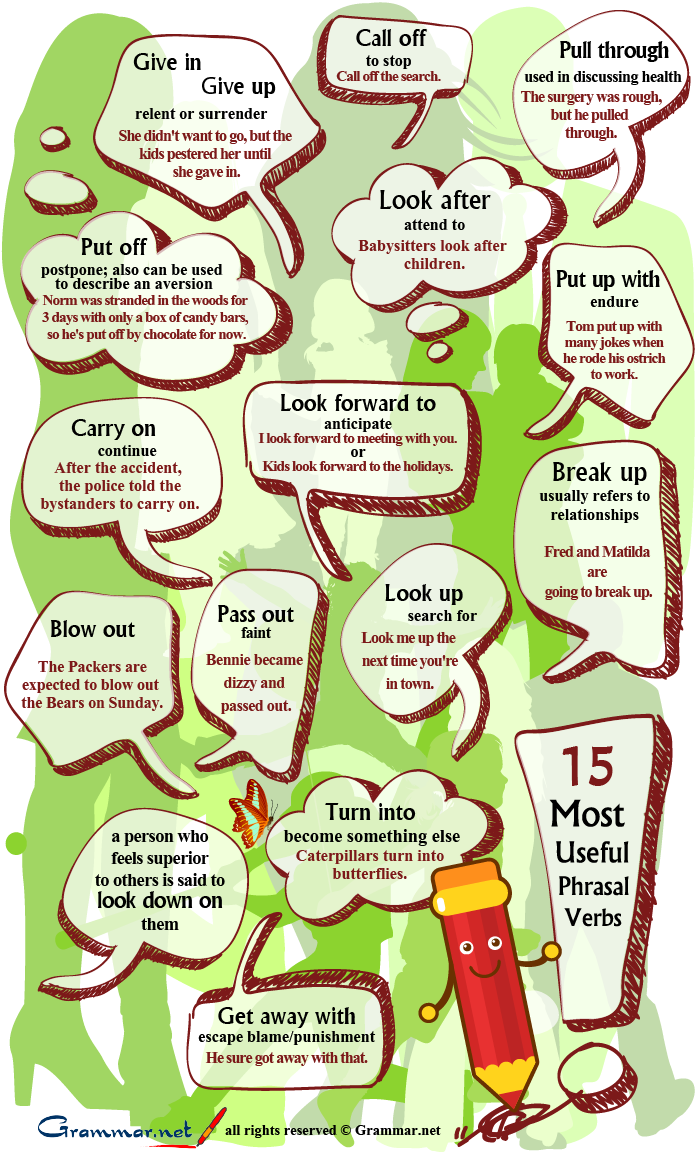
Phrasal verbs


A phrasal verbs is two or three words put together to make one verb.  Two-word phrasal verbs consist of a verb and a particle (an adverb or preposition). This combination of words often has a meaning that is very different from the meaning of its separate parts.


Bibliography

SEAMAN, L. (2011, dicember 8). Retrieved from Why Eating Family Meals Together is Still Important Today: http://eartheasy.com/blog/2011/12/why-eating-family-meals-together-is-still-important-today/

 Ferre, T., & Sanabria, K. (2009). overload informtion. In T. Ferre, & K. Sanabria, north star 4 (pp. 149-168). USA: Pearson Longman.

What’s the use of homework?


First homework: is an extra work that the teacher let to their students. The function of homework’s to practice what you saw in class.  Also helps the student argue and analyze the subject under study, especially when they perform investigations. These benefits are in a short term. In a long term some benefits can be: the student will improve their school performance, form study habits and personal and collective work, and it will encourage responsibility.


The homework’s has also a bad part. Some students may say that it’s not useful and that it reduces its free or social time. But I think that the homework’s have a function, that’s why the professors send us.  In some cases I think that teachers exaggerate with the amount of tasks, but in other cases is just a matter of organization. For me our cultural custom, let everything for the last time, has a strong influence in our organization.


Other important thing is that homework is for children or students, not for their parents. The children when they are small need help with their tasks and the fathers can help them. But if the parents does the full work, they don’t let their kids learn and they don’t teach them responsibility. They can help them just by (fernández editores, 2011):

§      The place. Procure a private and personal rather than a public place and family. It should be away from noise, music, television and conversations.
§      The atmosphere. Taking care of the furniture, lighting and materials are appropriate. Do not study in bed. If the chair is very comfortable and you can sleep warm atmosphere.
§      Organization. Help you organize your time and establish a schedule that parents are the first to respect.    

Glossary

                   
ª  Advocates: a strong supporter.
ª  Foundation: an idea from which a system develops.
ª  Fluctuated: change.
ª  Tangible: real.
ª  Self-esteem: feeling good about yourself
ª  Sacrifice: giving up something you want or enjoy.
ª  Duty: something you must do
ª  Demanding: challenging.
ª  Monitor: carefully check or examine.
ª  Accountable: considered responsible.
ª  Distraught: very upset.
ª  Cinch: something that is very easy.
ª  Outlawed: made illegal.
ª  Obedient: willing to do what is asked.
ª   Buckle down: concentrate and do your work.
ª  Came to mind: occurred to me.
ª  Count on: depend on.
ª   Over the top: excessive.
ª  Pays off: leads to good results. 
  ª  Ritual: habit.

 Grammar

  • Use make, have and let­ + object + base form of the verb to talk about things that someone can require, cause, or allow another person to do.
  •  Help can be followed by: object and base form of the verb or object and infinitive.
  • Get has a similar meaning to make and have; it is always followed by object and infinitive, not the base form of the verb.


Bibliography

Ferre, T., & Sanabria, K. (2009). overload informtion. In T. Ferre, & K. Sanabria, north star 4 (pp. 127-148). USA: Pearson Longman.
word reference. (2013). Retrieved from http://www.wordreference.com/definition/Underlying
fernández editores. (2011). Retrieved from Las tareas escolares: http://tareasya.com.mx/index.php/padres/tu-familia/consejos-didacticos/5346-Las-tareas-escolares.html


Giving to others: Why do we do it?


In our life the custom is to think just on us what we want or need the goals that we have and our own future. We are so busy trying to get whatever we plan, that we forget about the other especially of the ones that really need our help. Sometimes we realize about this when we become older and see that all we have is not useful if we die. The persons that give to other are the ones that are aware about its importance. Some famous people, actor or singer has this concern and they give part of their money for charity or make a foundation to help people. 

For example: Bill and Melinda Gates foundation, they work with partner organizations worldwide to tackle critical problems in four program areas. Our Global Development Division works to help the world’s poorest people lift themselves out of hunger and poverty. Our Global Health Division aims to harness advances in science and technology to save lives in developing countries. Our United States Division works to improve U.S. high school and postsecondary education and support vulnerable children and families in Washington State. And our Global Policy & Advocacy Division seeks to build strategic relationships and promote policies that will help advance our work. Our approach to grant making in all four areas emphasizes collaboration, innovation, risk-taking, and, most importantly, results.  (Bill & Melinda Gates Foundation, 2013)


Bono: His first contact with charitable causes was in 1986, prior to the Conspiracy of Hope tour, when World Vision invited him to Ethiopia. While there, Bono developed an education program with his wife, Ali, that used one-act plays and songs to spread information on health, hygiene, and other issues. He released a book of photos he took during the trip called “String Of Pearls”.  Bono followed his trip to Ethiopia with visits to Nicaragua and El Salvador with Sanctuary to draw attention to the conflicts and help children. He wrote a song called Silver and Gold for Steve Van Zandt’s Artists Against Apartheid, and participated in Van Zandt’s anti-apartheid single Sun City. Bono and The Edge attended the Festival Against Racism in Hamburg, Germany, in 1993. The event consisted of a concert, a press conference, a theatrical event, and a debate on the subject of anti-racism.  (Look To The Stars - The World of Celebrity Giving, 2013)

Glossary

  • Anonymously: from or by a person, author, whose name is unknown.
  • Appeals: an application or resort to another person or authority.
  • Benefactors: a person who supports or helps a person, institution, especially by giving money; patron.
  • Catastrophe: a sudden, extensive, or notable disaster or misfortune.
  • Cause: the ideals, of a group or movement.
  • Charity: the giving of help, money, food, to those in need.
  • Contribute: to give (support, money) for a common purpose or fund.
  • Donation: the act of giving, especially to a charity.
  • Freelance: a self-employed person.
  • Fundraiser: a person who raises money for a cause.
  • Generosity: willingness and liberality in giving away one's money, time; magnanimity.
  • Inherit: to receive (property, a right, title) by succession or under a will.
  • Mandatory: obligatory.
  • Moral: concerned with or relating to human behavior, specially the distinction between good and bad or right and wrong behavior.
  • Motivated: to give incentive to.
  • Passion: a strong affection or enthusiasm for an object, concept.
  • Philanthropy: the practice of performing charitable or benevolent actions.
  • Rewarding: giving personal satisfaction; gratifying.
  • Under the radar: doing something without other people noticing.
  • Wealthy: possessing wealth; affluent; rich.
 

Grammar

Relative pronouns in adjective clauses.

Adjectives clauses are used to identify or add information about nouns. Usually, the adjective clause directly follows the noun it refers to. These clauses are introduced by a relative pronoun, such as who, that, which, whose, where, or when.
Identifying adjective clause, gives essential information about the noun it refers to.
Non-identifying adjective clause, gives extra information about the noun it refers to. It set off in the sentence by commas.

 Who: refers to people. It can be the subject or the object of an adjective clause.

That and which: refers to places and things. They can be the subject or object of an adjective clause.

Whose: refers to peoples possessions. It can be the subject or object of an adjective clause.

Where: refers to places.

When: refers to times. They can be the object of an adjective clause.


Bibliography

Bill & Melinda Gates Foundation. (2013). Retrieved from http://www.gatesfoundation.org/what-we-do
Ferre, T., & Sanabria, K. (2009). overload informtion. In T. Ferre, & K. Sanabria, north star 4 (pp. 1-20). USA: Pearson Longman.
Look To The Stars - The World of Celebrity Giving. (2013). Retrieved from Bono Charity Work, Events and Causes: http://www.looktothestars.org/celebrity/bono
word reference. (2013). Retrieved from http://www.wordreference.com/definition/Underlying